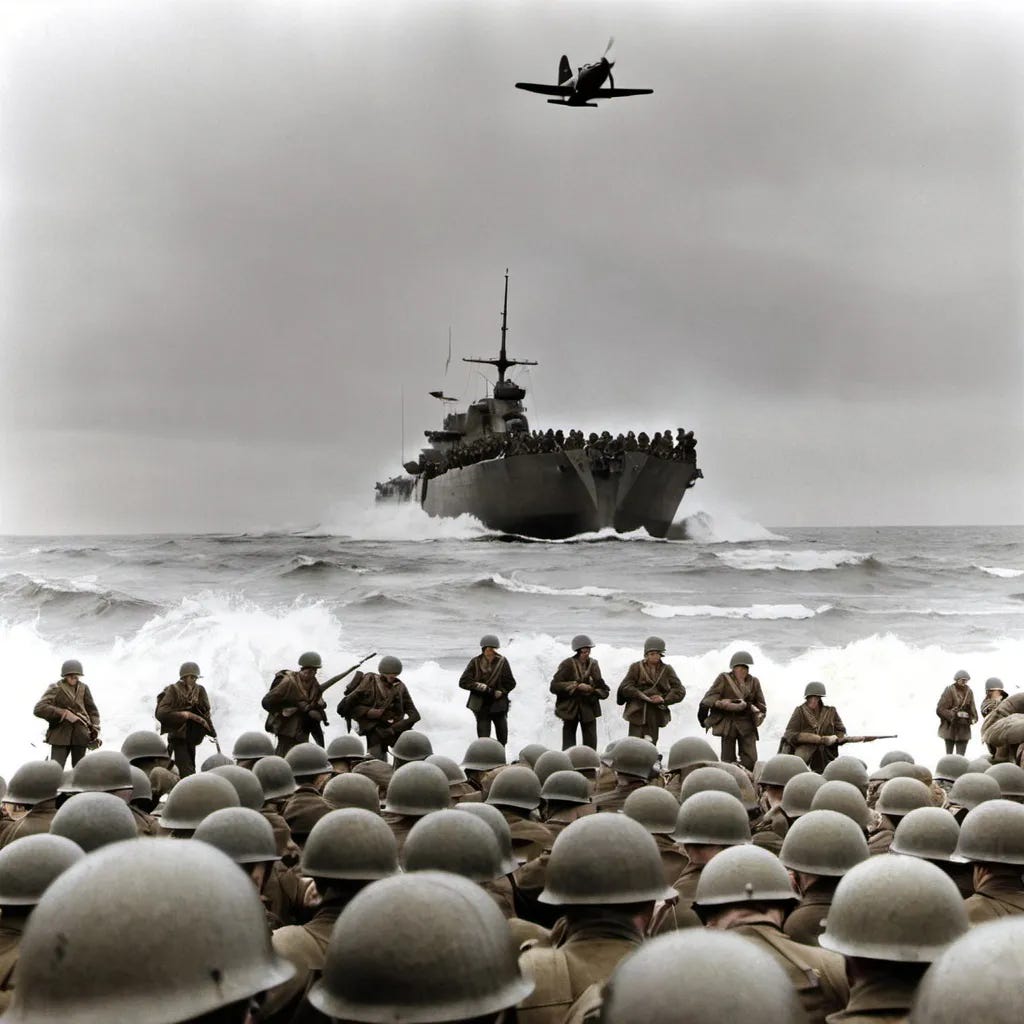
Why Humans Kill: Uncovering the Truth About War — Part II
The Deep Roots of War Are a Part of Human Nature

[Read Part I of this essay here.]
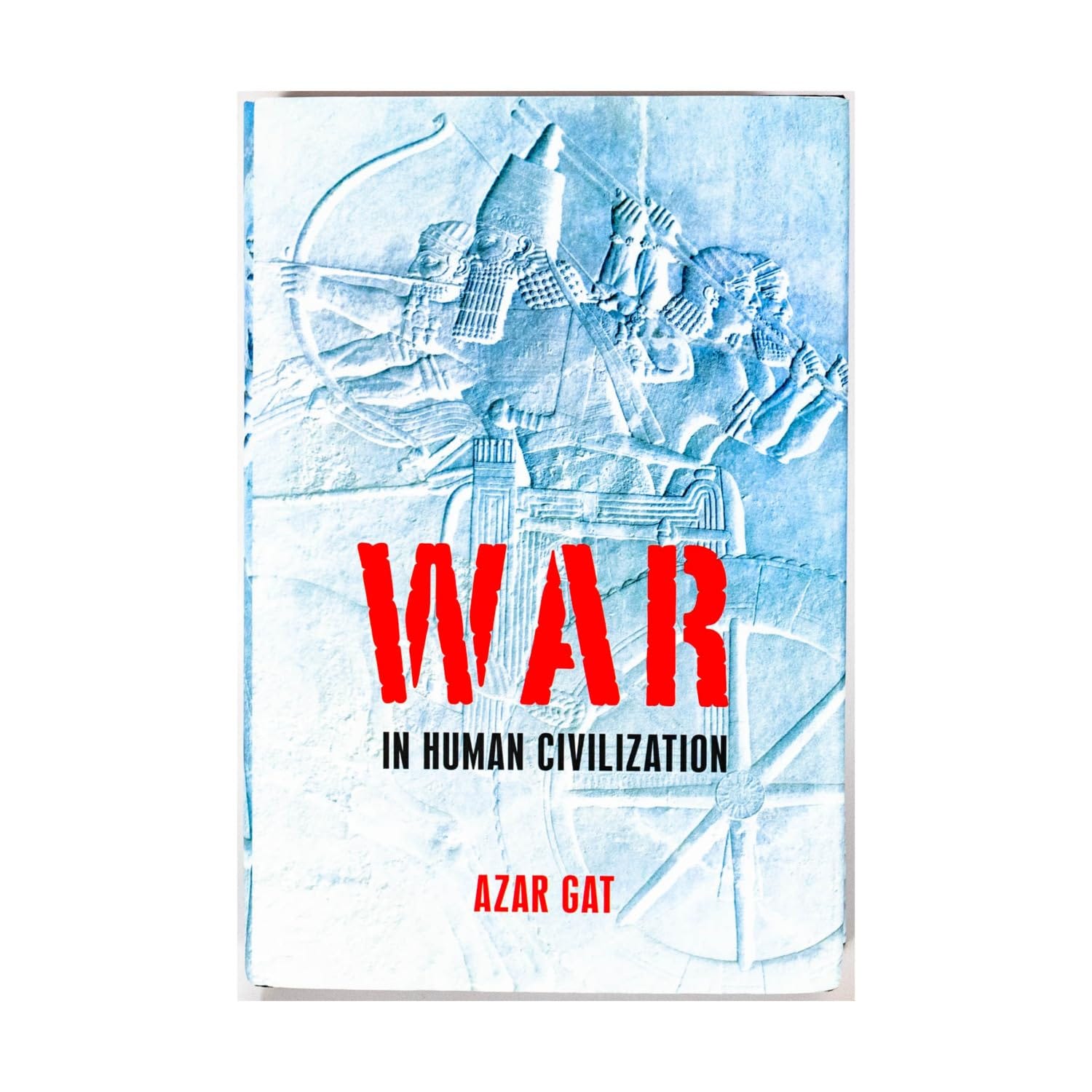
Azar Gat’s War in Human Civilization is an influential and truly ambitious tome (with a total of over 800 pages). In the book, Gat explains the evolutionary forces that shaped the psychology of warfare and deadly violence, then spends the final two-thirds documenting the history of human warfare over the last 10-thousand years (as you would imagine, given the title).
One of the most interesting and important topics that Gat looks at is the longstanding debate over whether humans are naturally peaceable or warlike. During the early-modern period, this debate was crystallized by two opposing views developed by Jean-Jacques Rousseau and Thomas Hobbes, respectively.
Rousseau held an optimistic view of human nature. He thought that in a state of nature, humans live harmoniously with one another, live a simple life, and are compassionate, liberated, and peaceful. It was civilization that corrupted humanity, Rousseau believed, rather than the state of nature. According to him, it was civilization that introduced the vices of domination, inequality, and greed. He argued that selfishness and competitiveness arose with the establishment of things like private property.
By contrast, Hobbes’ view of human nature was pessimistic. He argued that, in the state of nature—a condition before or sans law and governing authorities—humans naturally covet power, and, more generally, pursue their own self-interest above all—and they are perpetually fearful too. In a sense, Hobbes believed that all people in the state of nature are vulnerable to each other—because everyone is perceived as a mutual threat. Hobbes famously encapsulated this view of human nature when he said that life in a state of nature is “solitary, poor, nasty, brutish, and short”.
Gat is determined to resolve this debate, and to do so not with armchair speculation but with the best evidence available. His brief scientific overview of lethal violence among non-human animals also demonstrates that violence between members of the same species is ubiquitous in the animal kingdom; indeed, it was once thought that such intra-species violence was rare or non-existent. But the most direct test of the competing Rousseauian and Hobbesian views is to simply look at whether simple hunter-gatherers waged war, and if so, how frequently.
Simple hunter-gatherers are people who are either nomadic or semi-nomadic; have no formalized leadership or chiefs; no formalized institutions or laws; and live in small bands, typically between 20 to 40 people, of mostly relatives. Such peoples, either now or in the past, do not live in states; and they do not engage in either agriculture or animal husbandry. A hunting-and-gathering lifestyle is the kind of the lifestyle that humans have had for almost all of their existence as a species. And this means that it essentially reflects what our species’ original state of nature was like—which means that simple (as opposed to “complex”) hunter-gatherers are the best way to test whether humans are warlike in such a state of nature.
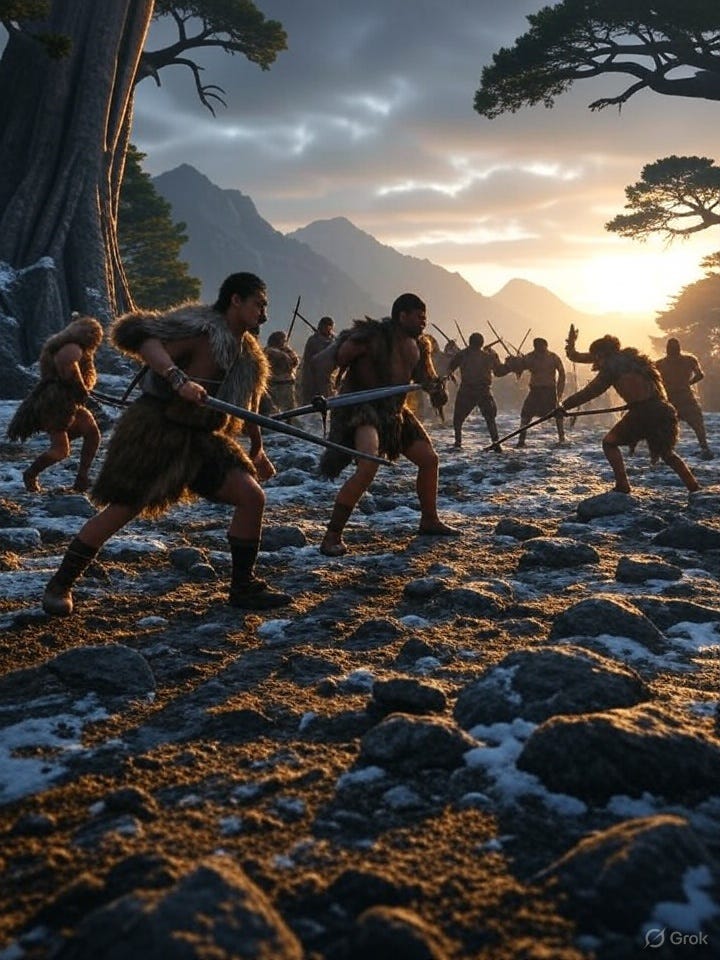
Gat begins by surveying the relevant archaeological and anthropological evidence pertinent to the question of whether hunter-gatherers fought (the tour includes a nod to the American archaeologist Lawrence Keeley’s watershed book, War Before Civilization: The Myth of the Peaceful Savage).
For instance, a male Neanderthal, dated to about 50-thousand years ago, has been found to have been stabbed in the chest by another (right-handed) individual; and other instances of lethal injuries to Neanderthal skeletons have also been discovered. Buried human skeletons dating from the Upper Palaeolithic in the former Yugoslavia, at Sandalja II, have been discovered with smashed skulls; and signs of violent injury have been frequently discovered at Upper Paleolithic burial sites in what was formerly Czechoslovakia. A burial site at Egypt’s Gebel Sahaba, dating back to the Late Paleolithic, contained human skeletons evincing injuries from projectiles—and this was the case for over 40% of the skeletons, of both sexes, and for children as well as adults.
Gat also points out that there is also a lot of evidence of violence among hunter-gatherers in recent history too. For example, even among Eskimos of the central Arctic of Canada, who apparently did not engage in warfare, they nonetheless did have rates of homicide, blood feuds, and quarrels that were very high. However, unlike in other locales in the region, the Eskimos in the central Arctic lived in one of the most inhospitable places on the planet, had very low population density, and their key resources couldn’t be hoarded and defended. All of these facts made war with rival groups unnecessary. But as Gat points out, along the Alaskan coast and in Greenland, where conditions were not the same, the local Eskimos there were very territorial and very prone to war.
Gat notes that anthropologists in the 1960s lionized a triumvirate of hunter-gatherer peoples that were alleged to be consummately non-violent, namely the Pygmies of central Africa, the Kalahari Bushmen of south Africa, and the Hadza of east Africa. But contrary to this belief of 1960s anthropologists, strong evidence shows that these groups warred not only with each other, but also with adjacent pastoral and agricultural groups (with the pastoral and agricultural groups having displaced the three groups into the isolated habitats they now live in).
Gat also points out that the homicide rates among the Hadza, Kalahari Bushmen, and Pygmies are so high that they are several times higher than the homicide rate of the contemporary US. For these hunter-gatherer groups, whether in Africa or Northern Canada, rates of violence only declined with the establishment of the state, which ushered in policing and formal authority.
Another line of evidence marshaled by Gat is a study that examined 99 bands of hunter-gatherers from 37 cultures in all. It found that virtually all of these bands made war, either currently (as the study was conducted) or relatively recently (circa from when the study was conducted). Another study that looked at hunter-gatherer groups found that 90% experienced violent conflict, and that the majority fought wars with other groups at least biennially. And as Gat notes, another researcher who conducted other comprehensive studies of hunter-gatherer warfare also concluded that warfare is more frequent the more a group depends on subsistence hunting. As Gat sums it up:
… simple hunter–gatherers, who were thinly dispersed and nomadic, and had no substantial possessions, are at the centre of the Rousseauite claim. Supposedly, they were peaceful because they had little to fight over and could always choose to go elsewhere rather than fight. Simple hunter–gatherers are particularly significant because, during most of the two million years of the Pleistocene and until about 35,000 years ago (the Upper Palaeolithic), all humans were apparently hunter–gatherers of the simple sort. Yet the evidence from historical simple hunter–gatherers is that they fought, and with substantial casualties. (p. 34)

Despite all the foregoing evidence of violence and warfare among living hunter-gatherers, however, there is at least one reason for cautious skepticism. It’s conceivable that outsiders may have disturbed the original, pristine conditions of their hunter-gatherer life, which may have then caused these hunter-gatherers to engage in warfare, or at least at elevated rates. For instance, clear cases of this kind of external influence—which led to greater rates of warfare—are found among Native Indian hunter-gatherers in the Great Plains of North America. And because hunter-gatherers make no records of their history (in written form), the archaeological evidence we surveyed earlier is the only other method of testing whether hunter-gatherers engaged in warfare in the state of nature.
But fortunately, there is another line of evidence that allows us to examine living hunter-gatherer groups who lived largely outside the influence of pastoralists, agriculturalists, and Westerners. Did these hunter-gatherers engage in warfare?
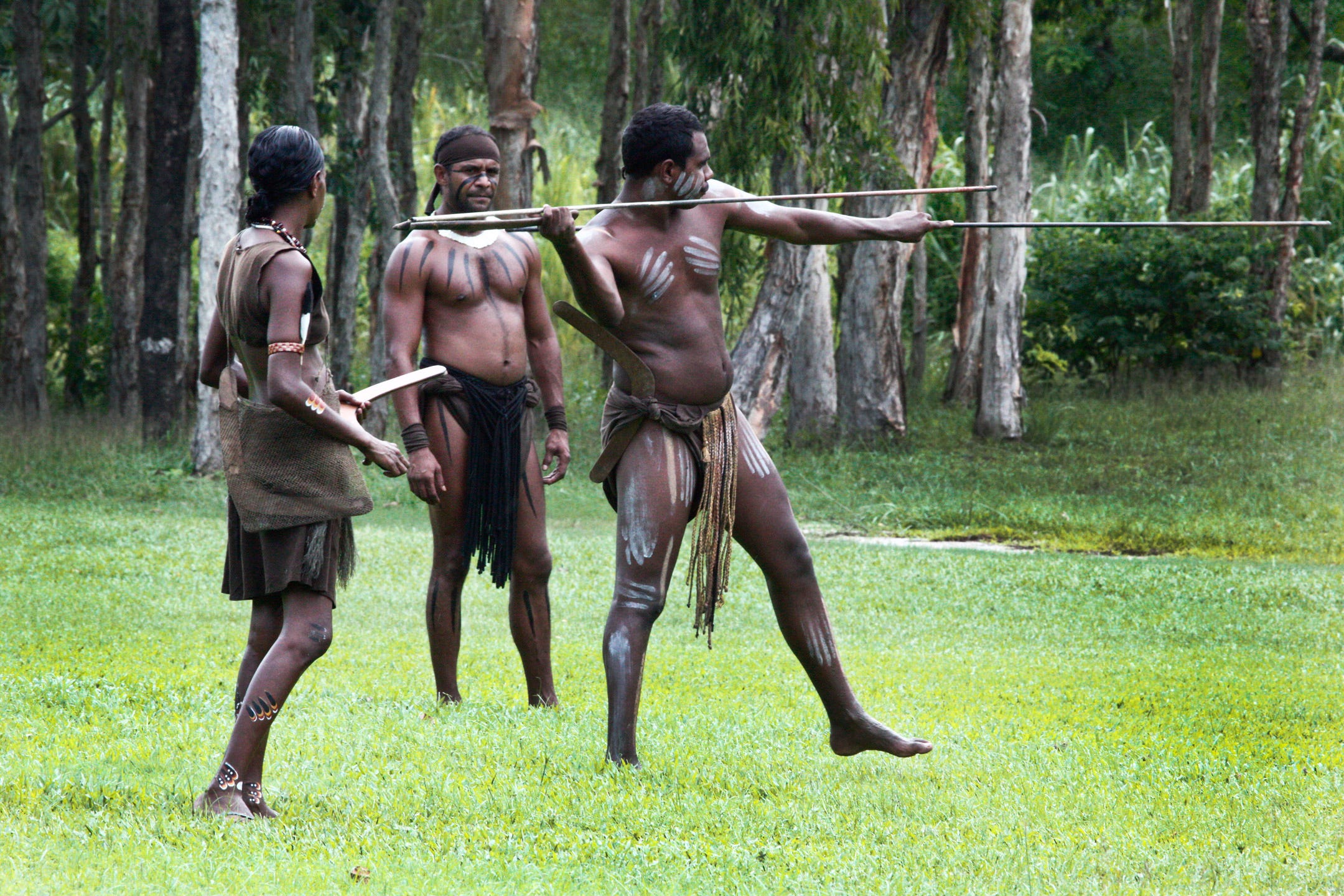
Gat looks at two cases which fit the above criteria and thus constitute near-ideal real-world “laboratories” to test whether humans are warlike or not in the state of nature—and if so, to what extent, on average. The first real-world laboratory is the Australian Aborigines, especially those who lived in the northern reaches of the continent, which didn’t experience contact with outsiders, including Westerners, until relatively late.
Generally, the population densities in Australia were extremely low, about as low as they come. Typically, resources—mainly wildlife and water access—are quite sparsely distributed. This fact might lead one to think that it would be a buffer against conflict and war between groups, since it seems like it would keep groups spaced apart. But sparsely distributed resources just means that people must traverse larger territories when and if resources become scarce for any reason—say, due to climatic reasons or over-consumption.
What’s clear from the eye-witness testimonies and anthropological accounts of Australian Aborigines is that feuding, raiding, and warring were common—even in regions with very low populations densities and highly dispersed resources. For instance, in one group, over the course of a single decade of attacks and counterattacks, over 10% of men in the age cohort between 25 to 45 perished.
And for another group of tribes whose total population was 3-thousand, another anthropologist estimated that about 200 people were slain in just 20 years—which amounts to about 7% of the total population killed in war. As Gat puts it, “As we shall see, all these figures tally with those of many other primitive societies. They represent very high rates of killing, higher than that of industrialized societies, which have supposedly been involved in massively lethal wars” (p. 44).
So, the disparate lines of evidence—archaeological and anthropological, as well as the non-human animal evidence—all converge on the same conclusion. And that conclusion is that, throughout human evolution, warfare was a common feature in the state of nature.
Gat concludes, “Inferring from this evidence and from the drastically reformed research about intraspecific deadly violence within animal species, fighting was probably an integral part of hunter–gatherers’ existence throughout the genus Homo’s evolutionary history of millions of years. … Thus contrary to the still widely held Rousseauite view, fighting was not a recent invention, associated with the emergence of sedentary settlement, food storage, property, high population densities, and social stratification” (p. 45).
Gat also spends several chapters discussing the evolutionary motives that shaped the history of human warfare. His diagnosis is that warfare is not a mere cultural invention, but neither is it an obligate instinct that necessarily must express itself, like hunger or thirst. Like many other cognitive and behavioral traits shaped by evolution, deadly violence can be deployed facultatively. Part of the calculus of whether and when to deploy violence is influenced subconsciously, and part is guided through conscious deliberation. At its core, this calculus depends on many variables. For instance, it depends on how scarce critical resources are and or how strong one group perceives itself to be vis-à-vis another group.
The broad history of human warfare tells us that war is a part of the human menu of options—or rather the male menu of options. But just as the most bellicose societies on record, like the Yanomami, do not demonstrate that war is an ineluctable outcome, nor do the most dovish societies, like modern Switzerland and Sweden, demonstrate that war is merely a cultural invention. War is one part of the menu, but cooperation and peace are other options in the menu, too.
Which option takes precedence, as with much of human behavior, depends on many complex contingencies. And naturally, the evolutionary foundations of war tie directly into the calculus of evolutionary fitness—namely reproductive fitness (or more specifically and technically, inclusive fitness). The section of the book on the evolutionary foundations of war naturally overlaps a lot with Martin’s book.
So, Hobbes overstated the ubiquity of war and violence; but in thinking that war and violence were purely a product of civilization and private property, Rousseau was in error. As the cognitive anthropologist and evolutionary psychologist Pascal Boyer puts it:
“Our tribal past certainly included both intense cooperation (within small groups) and trade and peace (between groups), as well as frequent aggression for murder, looting, and abduction (both within and between groups). The error of both visions was to think of humans as driven by unconditional, inflexible instincts toward war or peace. What makes humans go to war or cooperate is not stable, general, and context-free preferences for aggression or for peace, as Hobbesians and Rousseauists believed, but a set of conditional mechanisms that weigh the value of either strategy, given the current environment”
It’s also worth pointing out that most warfare among hunter-gatherers manifests as raiding and ambushes—or the typically relatively safe posturing and spear-or-arrow-throwing between two sides from afar. This should not be surprising, after all, since violence between animals, in general, is risky—since, all else being equal, another organism equipped with weaponry (like claws, teeth, or spears) can also inflict much damage on you if it can anticipate an attack.
By contrast, the raiding and ambushes of much of hunter-gatherer warfare usually gives the attacking side the element of surprise and thus reduces the likelihood of the attackers being injured or killed. Likewise, the direct confrontations between two sides that do occasionally occur are usually from a safe distance and disperse if someone gets injured or killed. Pitched battles among hunter-gatherers are quite rare.

Gat’s construal of the potential motives for warfare may be broader than Martin’s as well. As potential motives, Gat includes the capture of women, as wives or as part of harems—and he includes the raping of women through warfare as potential motives or at least as adventitious effects of war. Gaining direct reproductive access to women in this way, through warfare, increases a man’s reproductive fitness directly—whether or not it also increases his status too. And even when men were not explicitly motivated to gain direct access to women, women were often there for the taking in any case.
Access to women was a powerful selection pressure during human evolution. And sometimes men with poor reproductive prospects would have been powerfully incentivized by the prospect of acquiring reproductive opportunities through warfare—in addition to acquiring the benefits of belonging and increased status (including its proxy, namely resources).
Of note, Gat has an interesting discussion of how regional groups of hunter-gatherers can be solidified via kinship links. For example, when the daughter of someone in clan A marries a man in clan B, the daughter’s clan, clan A, now has an evolutionary-fitness interest in the well-being or survival of clan B, who she now resides in with her husband. The daughter now residing in clan B is like an evolutionary investment by clan A. Thus, the well-being and survival of not just their daughter, but also her husband, and even, albeit to a lesser extent, the other people in the husband’s clan, become important to clan A. Gat elaborates on this theme:
“Links such as these criss-cross the regional group, making clans ready to take risks in support of each other against the environment, other animals or strangers, for the good of their shared investment. It is this evolutionary rationale that accounts for the well-recognized fact that kin relationships and marriage links constitute the primary social bonds in ‘primitive’ and not so primitive societies. As we have seen earlier, hunter–gatherers felt safe to go only where they had kin. Political treaties throughout the ages have been cemented by marriage. Furthermore, the rationale of kinship does not terminate with close kin but extends further, although down a sharply declining curve. The same logic that makes it evolutionarily beneficial to sacrifice one’s life in order to save more than two siblings or eight cousins, and take risks at even lower ratios, holds true for 32 second cousins, 128 third cousins, or 512 fourth cousins. This, in fact, is pretty much what a regional group is, and is the main reason why members of the group will prefer the other members of the group to outsiders and even be willing to take some risk for them. As most marriages take place within the regional group, there is a wide gap between the ‘us’ of the tribe and outsiders. However, as the rationale of kinship applies further—to 2,048 fifth cousins, 8,192 sixth cousins, 32,768 seventh cousins, to entire peoples, and even humanity as a whole—does this not amount to a doctrine of brotherly love, the same idea of ‘species solidarity’ rejected before? There is a pitfall here of ignoring the other side of the kinship equation. The closer the kin, the greater the evolutionary reward for caring for them, but only as long as they do not threaten the prospects of even closer kin in the gene economy. For example, a sibling, who, on average, represents 50 per cent of one’s own genes, is a highly valued genetic partner, and it is worthwhile paying a considerable price and taking substantial risks for its survival. However, one is genetically doubly closer to oneself than to a sibling, so in cases of severe competition between them, siblings’ rivalry can become intense and even deadly”. (pp. 68-69)
Humans appear to have an evolved sense for caring about the survival and welfare of these larger regional groups, since one or more of their own kin often lived in such groups during human evolutionary history. With the rise of larger groups during the Holocene, such as chiefdoms, early states, empires, and later, nation states, this evolved disposition to care about kin and the regional groups they often lived in was co-opted. These larger social groups that arose during the Holocene were perceived as if they, too, were your kin group. And as a corollary, this misperception thus had the effect of undermining the fitness-enhancing intuitions of our evolved psychology for kin altruism.
Gat points out that the rise of these larger groups also provided a numerical advantage in competition and warfare with other groups. And this in turn set off an arms-race between groups for bigger size, better cohesiveness, and higher commitment to the in-group. It is also here where the cultural evolution of pro-social moralizing religions took off—since they helped to solve the problems inherent to living in large groups filled with anonymous strangers, which our evolved psychology wasn’t intuitively adapted to.
In the end, Why We Fight and War in Human Civilization converge on a difficult truth: war and violence are not cultural inventions or aberrations of the modern age; they’re a deeply entrenched thread in the evolved psyche of men and the tapestry of human history. But both books also allude to an apparent antinomy, namely that the evolved capacity for war coexists with the evolved capacity for restraint, cooperation, and ultimately peace. An important upshot of this is that a sober and honest understanding of war’s ancestral logic can equip humanity with tools to help maximize peace.

Addendum: The Imperial Conflict Between Great Powers and the Lead-Up to the World Wars
One of Gat’s historical chapters discusses the imperial rivalries between European powers, which spiralled over the course of the 19th-century and ultimately led to the great wars of the 20th. In the case of Britain, a central motive of imperial expansion was to secure free trade. There was no doubt some self-interest involved in this; yet, as Gat points out, there was, at best, a negligible economic benefit to this expansion.
(And despite whatever negligible economic benefits free trade with its colonies brought in, other economists have presented data showing that, given the total investments made in its colonies, colonialism as an overall enterprise was a net loss to the British. This was even evinced by the fact that the fastest-expanding economies of the 19th-century, Germany and the US, were bit players at that point on the imperial stage, while the biggest and fastest-expanding empires, France and Britain, experienced the biggest decline in relative economic power during that time.)
Military intervention in its colonies was always a backup plan for Britain, and not a favored one; the preference was always to have free trade maintained without direct military imposition (and perhaps with the implied threat of it). The belief was also that colonies had much to gain from participation in Britain’s free-trade network, at least all else being equal.
As Gat explains, the great powers initially wanted to avoid a scramble for colonial possessions, since they understood that this would ratchet up tensions between them, which of course could lead to war. Nonetheless, Britain was motivated to secure colonies in Africa pre-emptively; because it worried it might lose its free-trade networks if other powers established colonies there first and then cut off international free-trade with military force (and if, for instance, the Boers established sovereignty in the Transvaal and allied with Germany).
Naturally, and as Gat points out, the other European powers interpreted Britain’s actions negatively—namely as a power play to secure trade monopolization, which, to be sure, Britain’s actions at least partially were. The scramble to establish African colonies was thus catalyzed—with France responding, followed by Germany. Britain’s motivation to defend her network of free-trade made other powers worry that they would be pushed out of, or marginalized in, that network—and the actions of the other powers in turn spurred Britain to intensify its expansion.
The scramble exemplified the “security dilemma”: Britain’s actions, taken to bolster her security—in this case, to secure free trade—led the other powers to fear that they might lose access to free trade; and Britain’s initial motivation was born of the worry that the other powers would cut off its own access to free-trade first.
Each player’s own maneuvering had effects on the other players, leading to a spiral of reciprocal actions: Each player, worried about what its rivals might do, took pre-emptive action, which caused the others to respond—and so on, in iterative loops of pre-emption and mutual suspicion. Unfortunately, security dilemmas are to a large extent fuelled by mutual mistrust, incomplete knowledge of your rivals’ capacities and intentions, and an inability for the players to credibly commit to agreements and promises. On the other hand, Gat argues that national prestige seemingly helped power the scramble as well.
China, too, which was seen as a lucrative market, was implicated in the scramble. The British fear was that an expanding Russia might establish dominance there and cut off access to the Chinese market. However, the Russian threat was stemmed by the surprising Japanese win in the Russo-Japanese War of 1904-1905. Gat explains that protectionist policies, which were put in place by other nations, were also degrading the competitiveness of Britain’s own exports; and the industrial ascendancy of both Germany and the US chipped away at Britain’s hitherto economic hegemony in global trade. And during the Great Depression, Britain eventually instituted its own protectionist economic policies, in response to its loss of hegemony—whereas the removal of protectionist policies was now in the interest of both the Americans and Germans.
Gat states that, amidst the turmoil, Germany felt that it needed to secure its own empire, and, if necessary, with force—in case the global market was carved up by other powers and then closed to free-trade. This aim, and more sinister ones, would be rekindled with a vengeance under Hitler, post WWI. Japan, too, felt that it was being hemmed in by others’ protectionist policies—especially given that it was heavily dependent on trade to acquire critical resources. Rising protectionism by other great powers led Japan to see its own imperial ambitions as an existential necessity. Thus, Japan proceeded to annex Manchuria, and, during a war with China, entered north China.
In Gat’s words, “the seeds of the two World Wars between the great powers” were hence sown (p. 654). As Gat explains, the great powers were worried that the global economy would go from a free-market accessible to all, to a closed one ripped asunder, each part jealously guarded by a great power. Hence, the great powers were driven to acquire territory, even if only as a pre-emptive maneuver to guarantee their own existential security.
And as Gat points out, the free-for-all chaos that this security dilemma instilled in the great powers made them think about the long-term. So, even though places in Africa, for instance, didn’t offer much economic worth at the time, colonies there nonetheless were seen as a crucial basis for a great power’s future development and security. In a closed global economy, a nation’s economic might translates into national might—and national might reciprocally buttresses economic might and fuels its expansion.
Gat points out that had Britain exited the colonial competition, the illiberal nations of Germany and Japan would have closed their newfound empires to global trade and then might very well have used the resources therein to fuel even more global conquest. Further, and as Gat observes, the need for great powers to acquire resources to build and sustain their militaries, for defense purposes, both contributed to the push for war and helped fuel colonial ambitions.
Gat also argues that national prestige fueled the competition, too, synergistically with economic concerns. Colonialism was now viewed as a national aspiration, and it had lots of support among the general population of each nation—each nation’s desire to grab as much of the global market as possible for itself stoked the fires of nationalism, and vice versa. Popular dissatisfaction with the free market and liberal democracy were also growing, paving the way for the rise of the twin totalitarian movements of the 20th-century, namely socialism and fascism.